Almost everyone stays in Karimabad, and on a first trip you should too.
Hunza isn't one place. It's a run of villages strung along the river from Nagar in the south, up through Karimabad and Gulmit to Passu, and on to the Chinese border at Khunjerab. Karimabad sits in the middle of that with the best road access, the most beds, and a view of Rakaposhi that stops conversations mid-sentence. We've tried basing further up at Passu. It's quieter, the cones are extraordinary, and you'll spend a good part of every day in a car getting back to anything.
What sets Hunza apart from the rest of Gilgit-Baltistan isn't the scenery. Skardu's is arguably better. It's that somebody here has dealt with a foreign visitor before you: more rooms, more kitchens, more people who'll hear your problem and know who to phone about it. The thing that makes it easy is the same thing that fills it up. Come in July or August and you won't have Karimabad to yourself.
The valley, village by village
One river, one road. Read the villages upstream and you've got the map.
Nagar and the Rakaposhi side
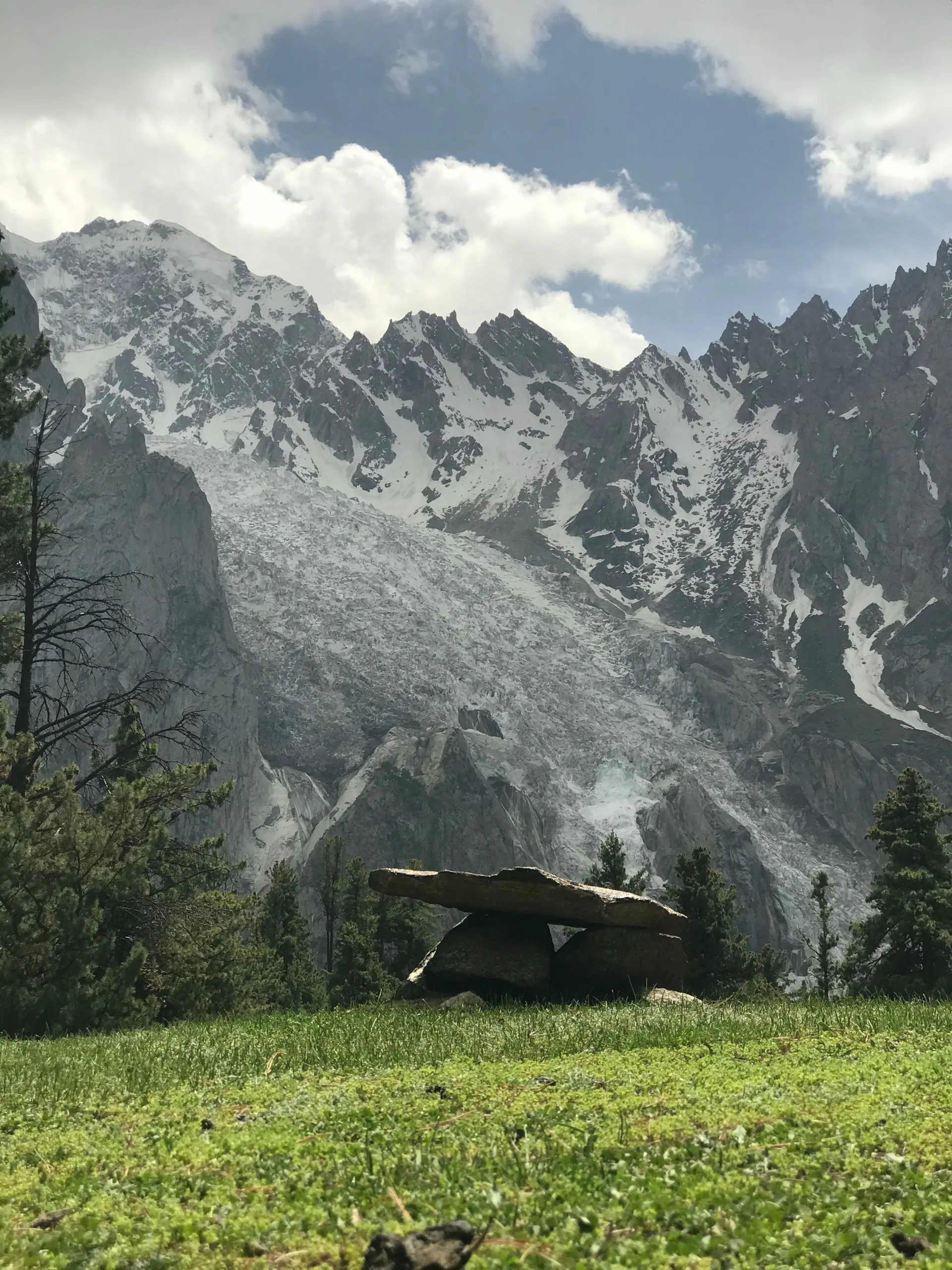
Nagar is the other half of the valley and most people drive straight past it. It's the far bank, over a bridge below Aliabad, with Rakaposhi coming straight up out of it: 7,788 metres, near enough to fill a windscreen. Past Nagar Khas a side valley climbs to Hopar, where a grey rubble-covered glacier fills the floor and you can walk out onto it. Half a day from Karimabad, and nobody at your breakfast table will have been.
Aliabad, Karimabad, Altit, Ganish, Duikar
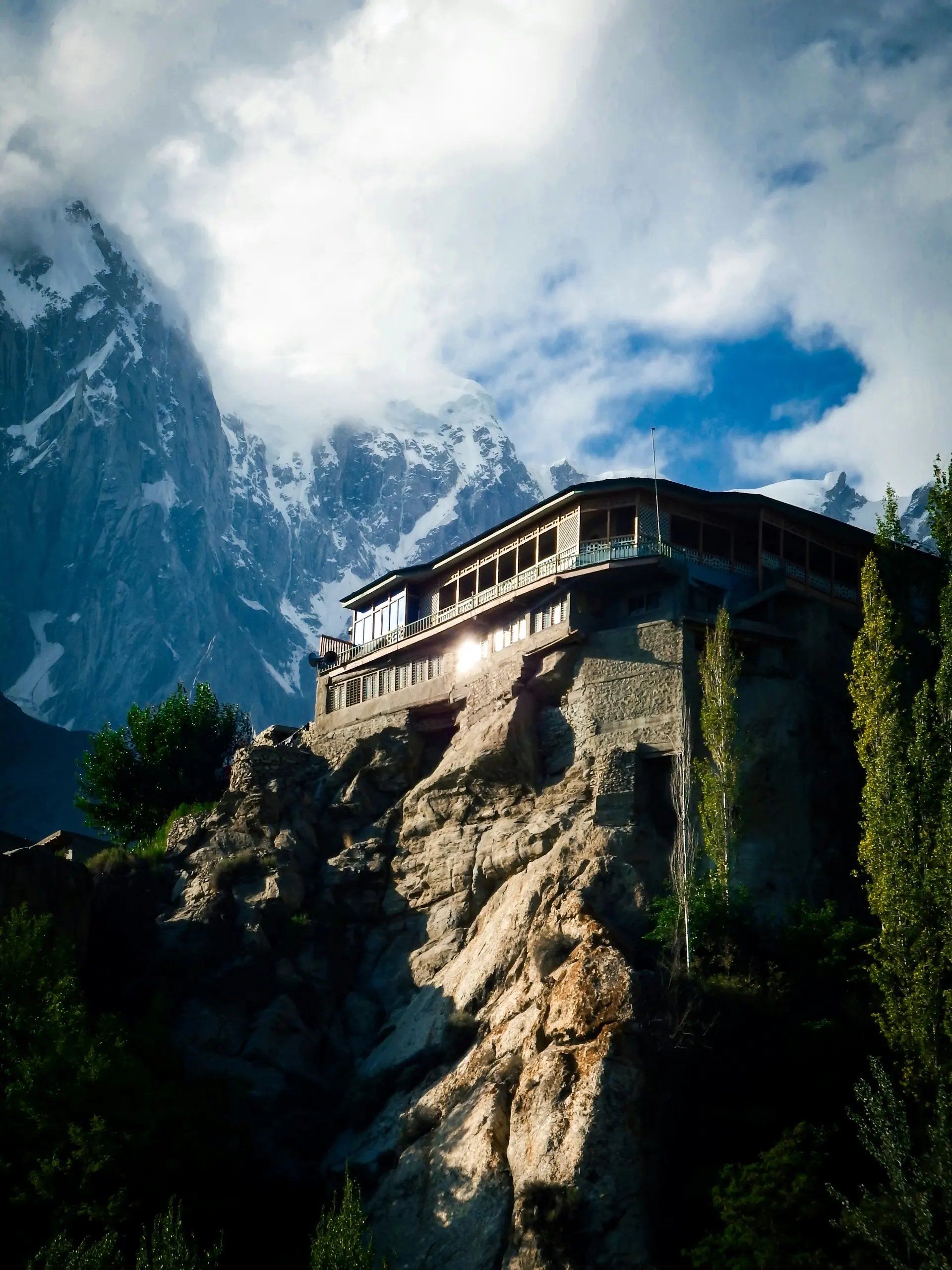
Aliabad is where the valley does its business: the bank, the fuel, the workshops, the hospital. Useful, on the highway, not where you sleep. Karimabad is the terrace above it, a slope of houses and guesthouses with Baltit Fort at the top of it. Altit is a short way along and lower down, a good deal older, its fort on a crag over the water and the old lanes still lived in beneath. Ganish is lower again, on the highway, and the oldest continuously settled village in Hunza: a walled cluster round a communal pool, four small wooden mosques and a watchtower. Duikar is highest, up a steep road to the shoulder above everything, and its viewpoint is the one everybody calls Eagle's Nest.
Attabad, Gojal and the road to China
In January 2010 a hillside came down at Attabad. It dammed the Hunza River, buried the highway and flooded the villages upstream. What's left is a long turquoise lake with the KKH running above it through tunnels, and it exists because of a disaster people here still date things by.
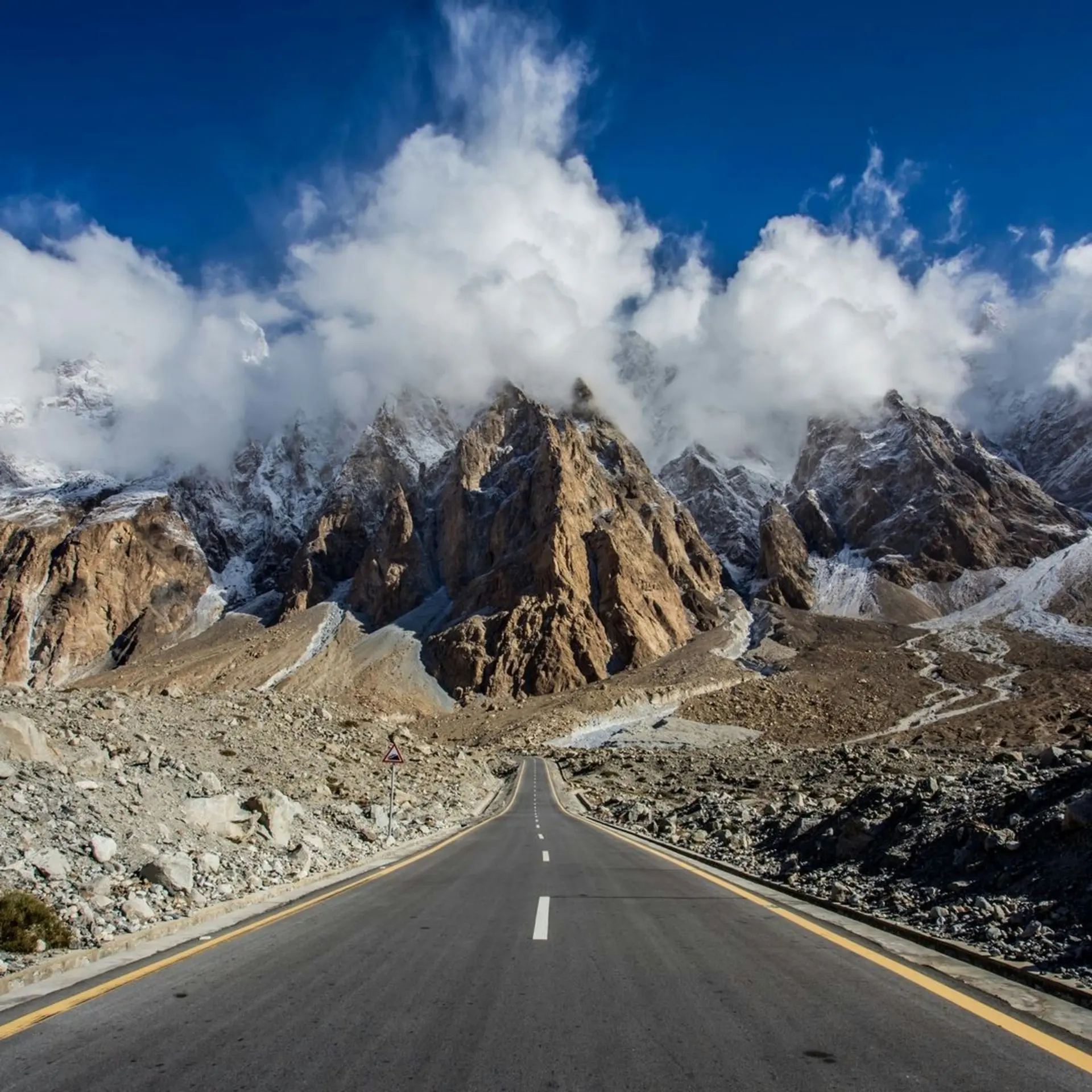
Above the lake is Gojal, upper Hunza. Gulmit comes first, the main village up there and a working one. Then Hussaini, where a suspension bridge of planks and cable crosses the river with daylight showing between the boards. Then Passu, under the serrated ridge called the Passu Cones or the Cathedral, with Passu Glacier behind it and the much larger Batura just north. Borith Lake sits on a bench above the road between Ghulkin and Passu.
Sost is the last town: customs, immigration, and the dry port where the freight between the two countries stops. Beyond it the highway climbs to Khunjerab at 4,693 metres, the highest paved border crossing in the world. The Pakistan side is generally driveable to the marker from roughly May to October. Whether the crossing itself is open is a separate question on a separate calendar: passes and roads sorts out both.
Who lives here
Two languages, split by geography. Burushaski in central Hunza and across in Nagar, which linguists have never managed to connect to any other language on earth, and Wakhi from Gulmit upstream through Gojal. Most of the valley is Ismaili, and the building at the centre of a village is usually the jamatkhana. The schools came early, girls' schools included, and Hunza has sat near the top of Pakistan's literacy tables for as long as anyone has compiled them. The forts belong to the same story: Baltit and Altit were close to collapse before the Aga Khan Trust for Culture and the local community restored them, along with the wooden mosques at Ganish. None of it is roped off, and people live in the lanes.
What grows here
Apricot country. The valley goes white and pink with blossom in April, the fruit dries on flat roofs in autumn, and the kernels get pressed for an oil you'll be offered for your skin. Walnuts and mulberries line the irrigation channels. Cherries come first, in early summer, apricots after. Eat the dense walnut-studded bread while it's warm, and order chapshuro at least once: flat bread stuffed with spiced minced meat and fried.
Getting there
Two routes, and people pick the wrong one more often than you'd think.
Fly to Gilgit and you drive up from there, a couple of hours on the Karakoram Highway, and it's the finest stretch of driving on the trip. The catch is getting on the plane at all. The flights are infrequent, the weather cancels them, and we've spent a morning in the terminal watching a departure board that never changed. Read Skardu and Gilgit flights before you build a plan around one.
Drive up from Islamabad and you're on the KKH for most of a day, then more of the next. Here's the part most guides leave out: between Mansehra and Chilas the highway runs through country that several governments tell their citizens to stay out of, and that affects your travel insurance as much as your nerves. Check the policy wording before you go. The Karakoram Highway guide has the route in full, and passes and roads tells you what's open when.
Deciding between Hunza and Skardu
A week or less and room for one valley? Don't toss a coin. They're different trips and one of them is probably wrong for you, so we've put them side by side: Hunza or Skardu.
Where this sits in a longer trip
Hunza anchors the northern end of a 10-day itinerary, and takes up roughly a third of a 14-day one that fits Skardu in as well. Give it less than that and you'll spend most of your days on the road you came in on.
Four pages carry the detail this one doesn't: where to stay settles the village, things to do covers the forts and the glacier day, best time to visit goes month by month, and Hunza hotels is the short list we keep by hand.