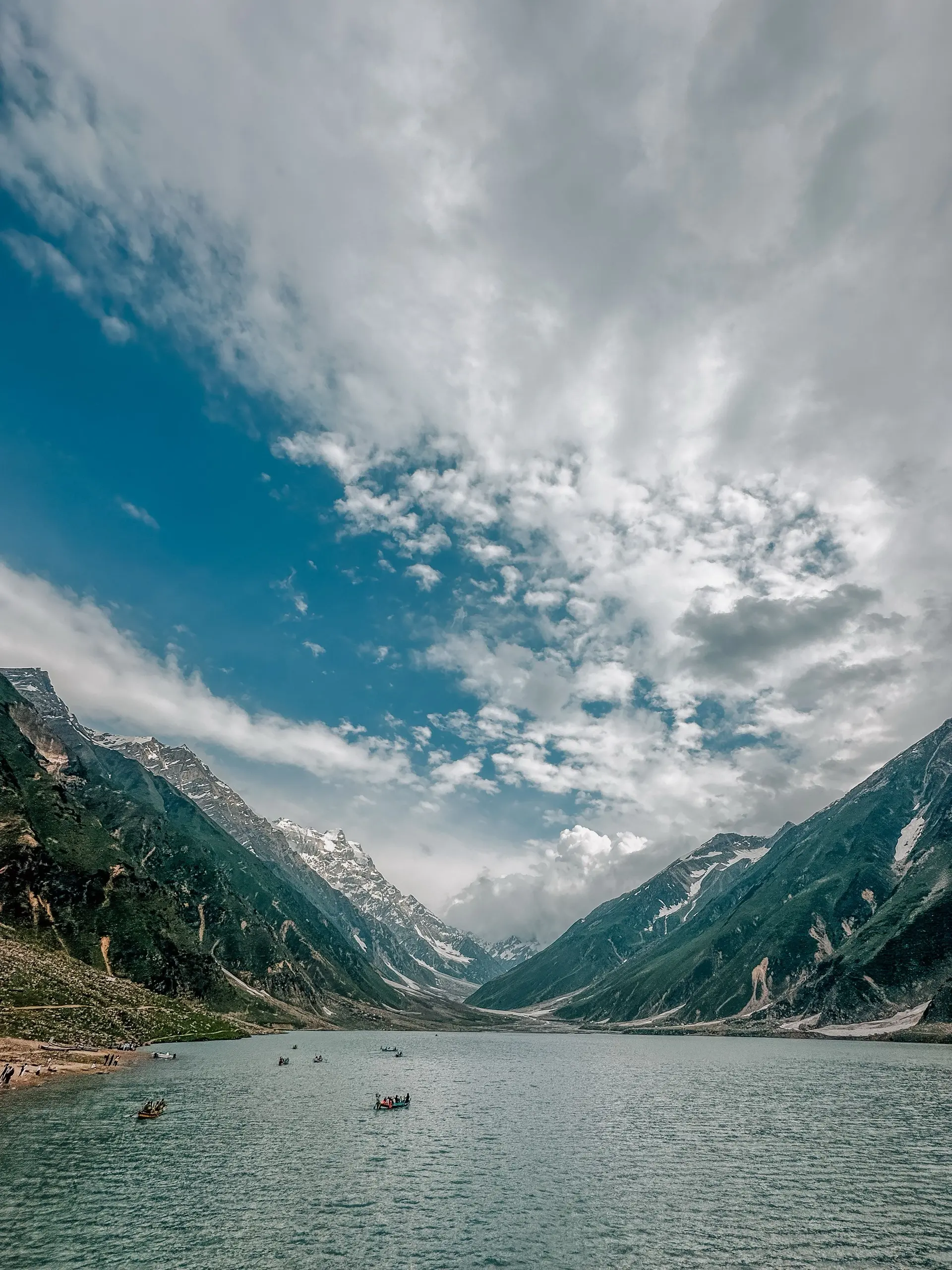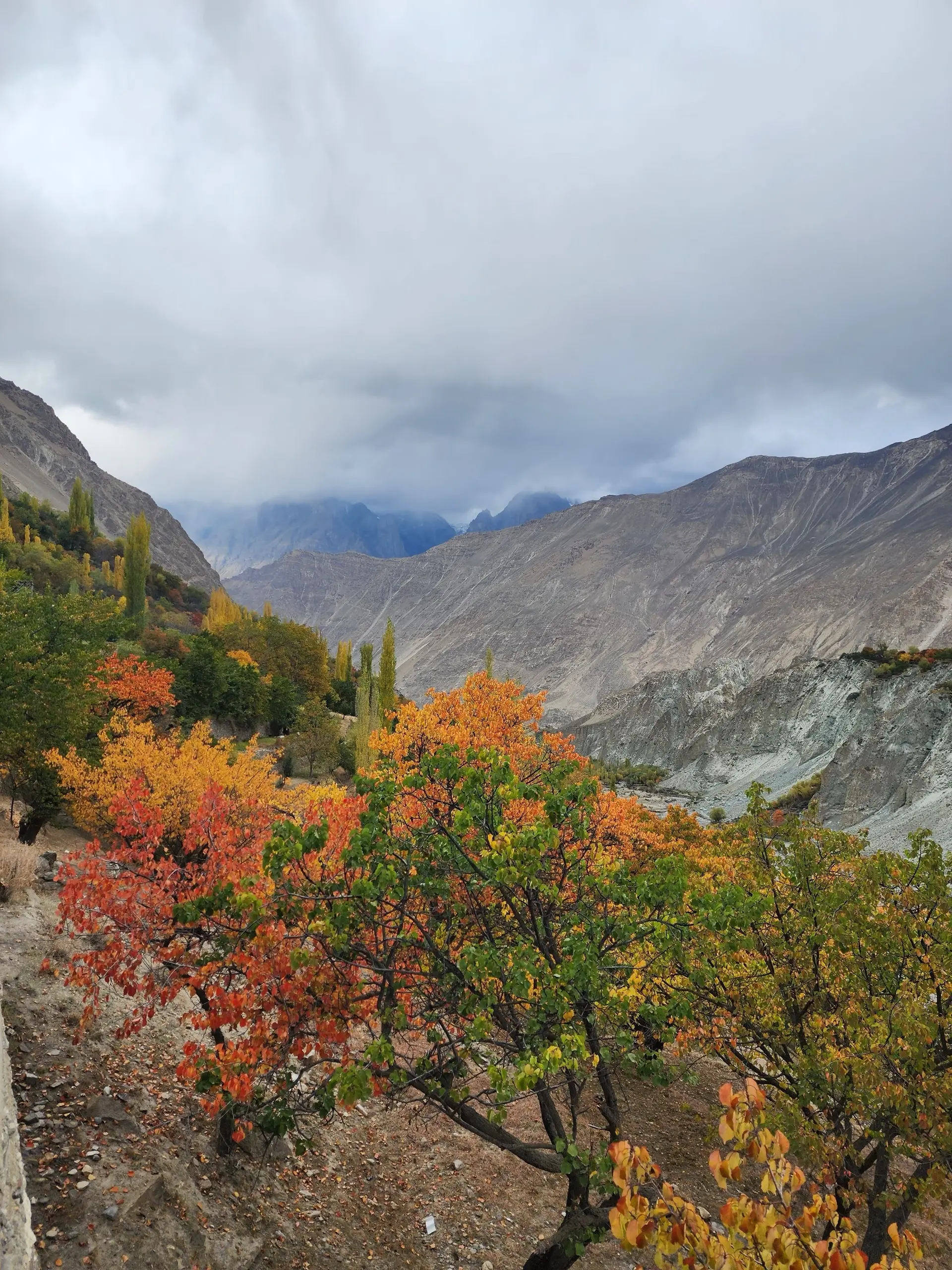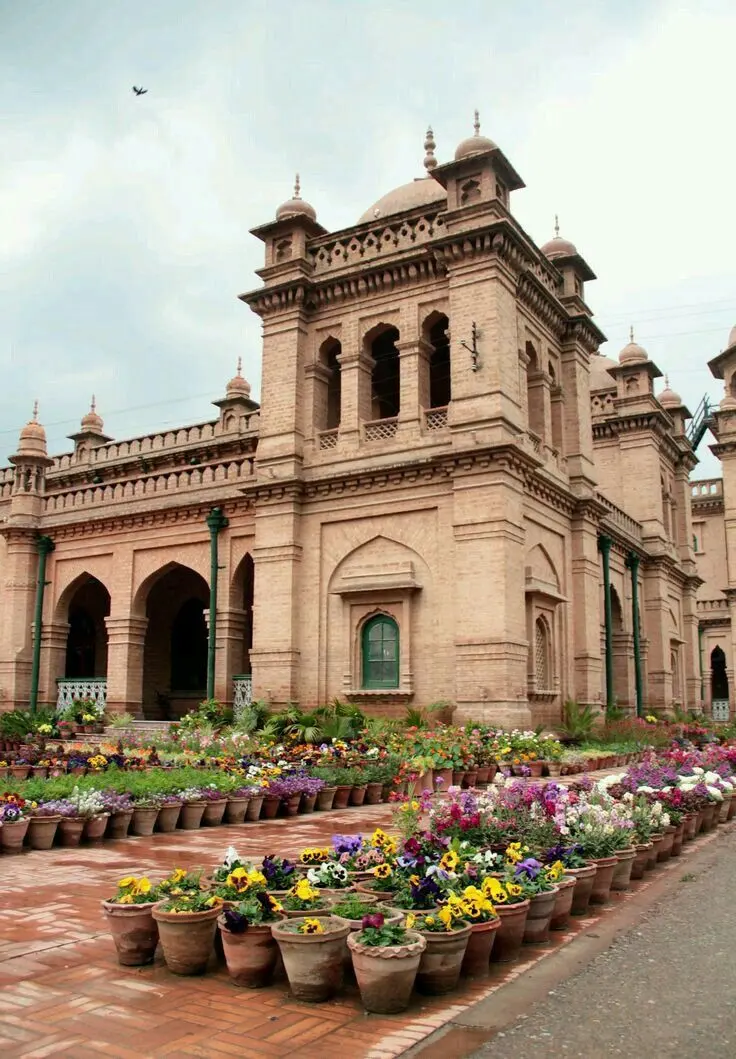
Mingora doesn't sell it. You come in past workshops and tyre stacks and a fruit market spilling into the road, and you think you've been had. Keep going. A few kilometres north the town runs out, the road takes the river's line, and the valley opens: the Swat running fast and pale green over white stones, rice terraces on the flat, cedar up both slopes until the ridge cuts them off.
It's low, by the standards of the rest of this site. Under a thousand metres at Mingora, which is why there's soil and forest and three crops a year. Swat was also its own country until recently, run by the Wali until the princely state was merged into Pakistan in 1969. What it holds now is cedar and cold water, more Gandharan Buddhist archaeology than any other district in Pakistan, and a ski slope. Those three have nothing to do with each other.
Up the valley, bottom to top
One road holds the whole valley, and it's just long. Mingora is the commercial half: loud, dusty, and where the mechanics, the jeep drivers and most of the beds are. Saidu Sharif is joined onto it and quieter, with the museum and the Wali-era buildings. Marghazar climbs south from there to the White Palace, white marble, built in 1940 as the Wali's summer residence and a hotel now. An hour, no more. Fizagat is a riverside strip north of town, chairs set in the shallows and families eating trout.
Past Khwazakhela the walls close in. Madyan is the first properly mountain town, shawls and honey and walnut wood in the shops, hotels stacked above the water. Bahrain sits further up where the Daral meets the Swat. Both are built onto the river, in places into it. Remember that.
Kalam is the top of the metalled road, in a basin where the Ushu and Utror rivers join to make the Swat. Scruffy, rebuilt more than once, and the setting carries it. Above Kalam the tarmac gives out. Ushu is the deodar forest east of town, the best in the valley by a distance, and further up the jeep track is Mahodand, a lake in a meadow bowl at the head of it all: rough track, river crossings, slow both ways, litter round the water when you arrive. Gabral runs west out of Kalam instead and is the quieter choice. Go as far as Kalam at least. Bahrain to Kalam is the best of the drive, and a trip that turns round at Madyan has missed it.
Gandhara, and why nobody stops
Swat holds the densest concentration of Gandharan Buddhist archaeology in Pakistan. Not the most famous, which is Taxila, and not the best displayed, which is Peshawar. The densest. This was Uddiyana, a Buddhist heartland for something like a thousand years, and the Italian mission has been digging here since the 1950s. Almost everybody drives past the lot of it on the way to the lakes. That's the biggest mistake people make here.
Butkara I is two kilometres from central Mingora and it's the one to see first: a great stupa enlarged five times, each casing built over the last, ringed by smaller votive stupas. A thousand years of people rebuilding the same holy thing. The Swat Museum at Saidu Sharif is small, well lit and better than it needs to be. Do it before the sites, not after.
The Jehanabad Buddha is carved into a boulder above Manglawar, seventh century, one of the largest rock-cut Buddhas in South Asia. Militants blew the face off it in 2007. The Italian mission spent years putting it back with 3D scanning, and it's standing again. You climb terraced fields to reach it.
The rest sits south of Mingora and goes in a day with a car. Barikot is a live excavation of a fortified town, and Udegram has a hill fort above a Ghaznavid mosque, where you watch the valley's religion change under your feet. Amluk-Dara is the one that stays with you: a third-century stupa in open fields under Mount Ilam, dome largely intact and usually nobody there. Shingardar is a huge stupa mound beside the road near Ghalegay. Gogdara is older than all of it, prehistoric carvings of animals and chariots. None of these has a queue.
Malam Jabba, honestly
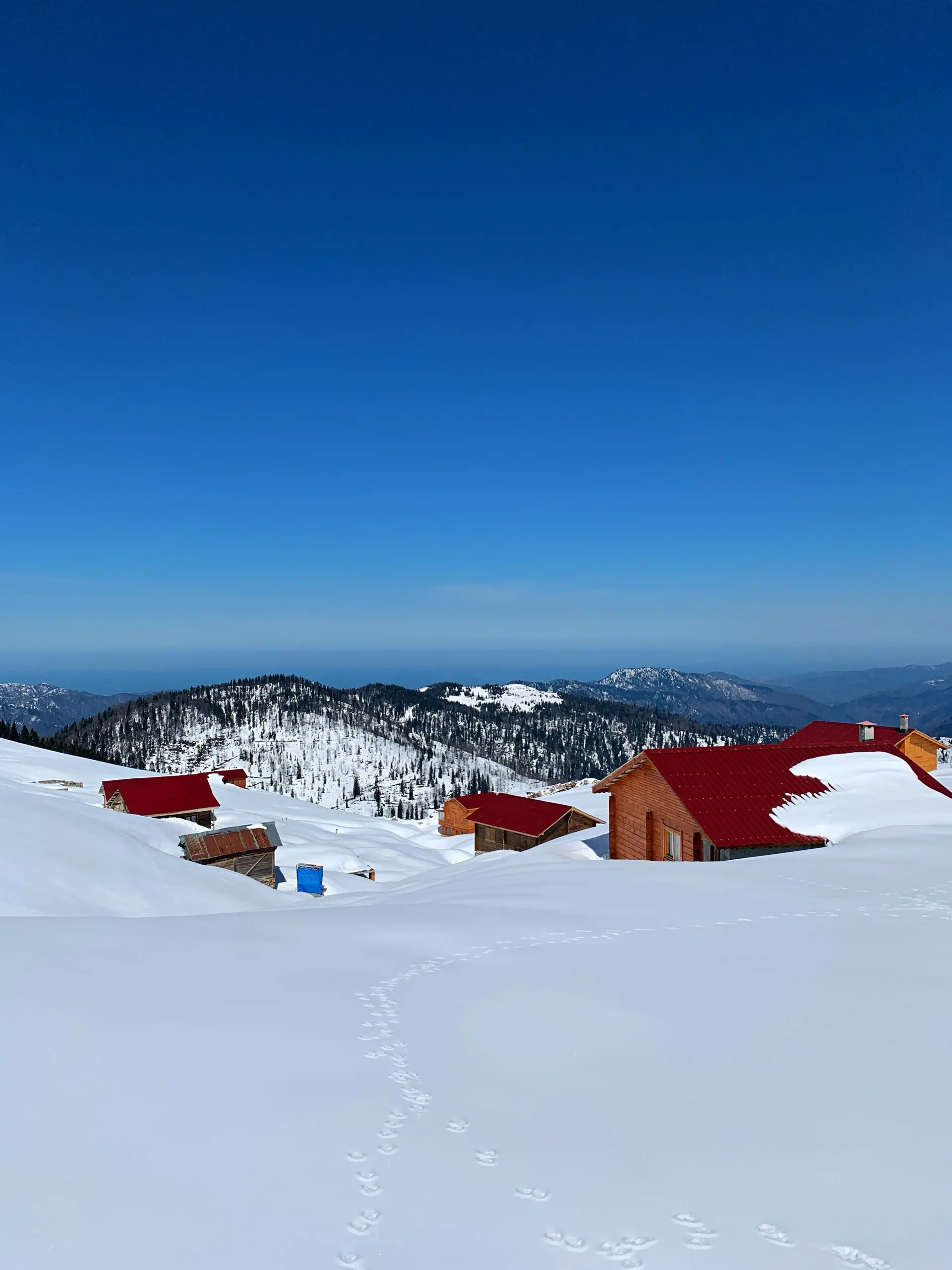
There's a ski resort in Swat, on a ridge east of the valley at about 2,800 metres, with a chairlift and a hotel. It was destroyed during the insurgency and rebuilt. Snow is a deep-winter business, roughly January into March, both ends unreliable and the depth swinging hard year to year. If you've skied the Alps, the Rockies or Japan, this isn't that: one short mountain, one lift, limited vertical, grooming that comes and goes, and rental kit to inspect rather than trust. It's an enjoyable few hours, not a ski holiday. Come for the drive, the ridge and the oddness of tea at a ski station in Khyber Pakhtunkhwa. In summer the lift runs for day-trippers.
Where to base yourself
Don't do this valley from one bed. Day-tripping Kalam out of Mingora burns the day in the car, so pick two of the three below.
Mingora or Saidu Sharif if the archaeology is why you came. Every site is an easy drive, the museum is here, and you can find a car, a driver and a decent room without arranging anything. You'll sleep in a busy provincial town with traffic noise and no view.
Madyan or Bahrain if you want the river: water loud enough that you hear nothing else, side valleys in the morning, trout in the evening because trout is what there is. Nothing happens after dark, and look hard at where your room sits relative to the water.
Kalam if you're going above it, because it's the only base that makes sense for Ushu, Mahodand and Gabral. Rough, seasonal, unpleasant at the height of summer. Our default is two nights in Mingora and two in Kalam.
When to go
March to October at valley level. Kalam and above are seasonal, and the road up can close. April and May are the best of it: blossom, terraces going green, water high with snowmelt. Late September and October are the other window, thin crowds and clear light.
July and August are a different place. Domestic tourism arrives all at once, the road above Bahrain becomes a queue, and rooms that sat empty midweek in May go by Friday lunchtime at rates nobody quoted in spring. Go midweek if you must. Better, don't.
The monsoon is the serious planning point, not the crowds. Swat has flooded badly and repeatedly. 2010 tore through the valley and 2022 did it again, taking out bridges, road and hotels rebuilt in the same riverbed after the last time. Flash floods come down the side nullahs with almost no warning and people die in them most years. So: no room built out over the water in monsoon season, and accept that the road you came in on can be gone for a day. Winter shuts the top of the valley and opens Malam Jabba.
Getting in and getting around
Come from Islamabad. The Swat Expressway leaves the M-1 near Nowshera and runs to Chakdara, which took the worst of the old approach out, and an extension further up the valley has been building for years. From Chakdara it's ordinary valley road into Mingora. Saidu Sharif has an airport, but service there has started, stopped and started again and stays thin, so treat any flight you find as a bonus. Inside the valley, take a car and a driver for the archaeology and Malam Jabba, and a locally hired jeep with its driver above Kalam, because the Mahodand track crosses water and breaks up every year.
Peshawar is the other sensible approach, and the better one if you're serious about the Gandhara, because the museum there explains these sites. Read is Pakistan safe before either: advisories on Khyber Pakhtunkhwa are stricter than anything written about Gilgit-Baltistan, they differ between governments, and they're what your insurance keys off.
How long to give it
Three days is the minimum that isn't a waste, and four is better. Day one, arrive and give the afternoon to the museum and Butkara. Day two, a car south for the loop: Shingardar, Amluk-Dara, Barikot, Udegram, then back up to climb to the Jehanabad Buddha with the light going. Best day of the three. Day three, drive up to Kalam slowly, stopping at Madyan and Bahrain and wherever the river makes you. With a fourth day, take a jeep into Ushu and on to Mahodand, or go west to Gabral for quiet.
Nearby
West over the mountains to Chitral and the Hindu Kush, south to Peshawar for the museum that explains everything up here, or east to Naran and Kaghan, the same green valley with more crowds.